Past REC Scholars
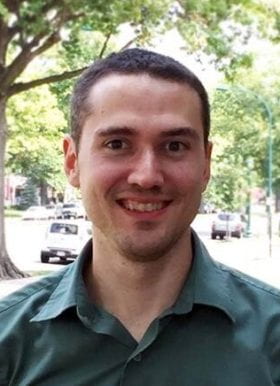
Andy Aschenbrenner, PhD
Andrew (Andy) Aschenbrenner, PhD is an Instructor of Neurology at Washington University in St. Louis. He has expertise in the development, administration, and analysis of cognitive and behavioral tests in healthy older adults and individuals with preclinical and very mild Alzheimer disease (AD). His current interests include evaulating the utility of intraindividual variability in cognition and personality as predictors of AD risk. He is also interested in applying novel statistical techniques (e.g., dynamic structural equation modeling) and computational models to further understand cognitive changes in the earliest stages of AD.
- Email: a.aschenbrenner@wustl.edu
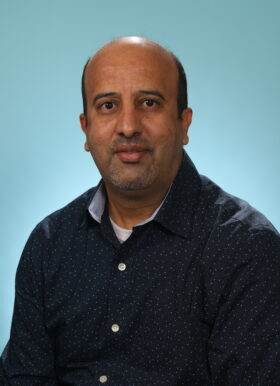
Abdallah Eteleeb, PhD
My research interests lie in the field of Bioinformatics and Computational Biology. More specifically, I am interested in the development of computational algorithms and machines learning approaches to integrate and interpret multiple large-scale modalities of “omics” data to better understand the biology of multiple neurodegenerative diseases with more emphasis on Alzheimer’s disease.
- Phone: 314-273-1560
- Email: eteleeb@wustl.edu
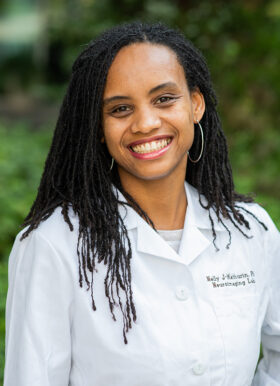
Nelly Friedrichsen (Joseph-Mathurin), PhD
Research interests include: neuroimaging, neurodegenerative diseases, Alzheimer disease, neuroscience
- Phone: 314-273-8261
- Email: n.joseph@wustl.edu
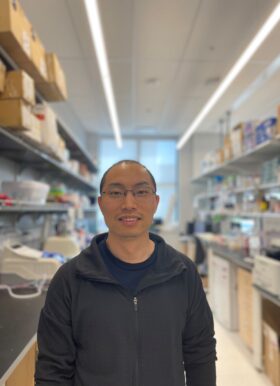
Tom Lin, PhD
Dr. Tom Lin is an instructor in the Department of Biochemistry and Molecular Biophysics, working with Dr. Benjamin A. Garcia. He completed his PhD research in Medicinal Chemistry at the University of Tennessee and postdoc training in Chemical Proteomics at the University of Pennsylvania. His primary research focuses are the discovery, biological functions, and therapeutical potentials of posttranslational arginylation using chemical, proteomic, and biochemical approaches. One of his main projects is to unveil the roles of arginylation in the progression of tauopathies and Alzheimer disease.
- Email: zongtao@wustl.edu
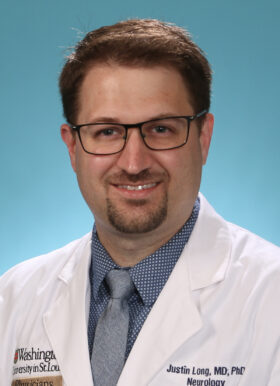
Justin Long, MD
Dr. Long's research interests include understanding the pathophysiology of Alzheimer disease, specifically as it relates to the role of cholesterol metabolism in modulating the immune response in animal models of Alzheimer disease pathology.
- Email: justin.m.long@wustl.edu
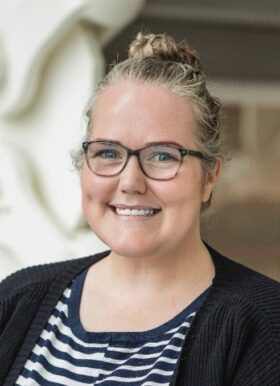
Nicole S. McKay, PhD
Originally from New Zealand, I am an Instructor (Radiology) working in the Neuroimaging Laboratories Research Center (NIL-RC). Broadly, I am interested in understanding heterogeneous cognitive trajectories across the lifespan, and in (Alzheimer) disease. I am currently working on projects that aim to understand the relationship between tauopathy and white matter degeneration, as well as their combined downstream influence on cognition. I am particularly interested in exploring whether unique patterns of tau protein seeding and spread, along with tau-mediated disruption to local white matter structures, can partially explain the heterogeneous cognitive outcomes associated with Alzheimer disease.
- Email: n.mckay@wustl.edu
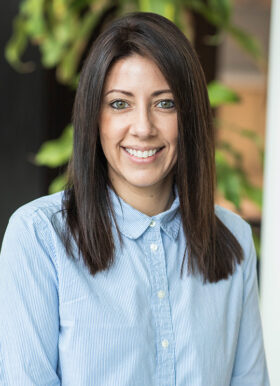
Karin L. Meeker, PhD
Dr. Karin Meeker is a post-doctoral researcher in the Ances lab. She completed her PhD in Cognitive Neuroscience at Saint Louis University. Her primary goal is to further the understanding of disease pathogenesis and progression of Alzheimer disease (AD) using multimodal methods. Since beginning her position, Karin’s work has largely focused on the utilization of emerging markers of inflammation and neurodegeneration to determine how they are associated and interact with established neuroimaging biomarkers of AD. She is also interested in ethno-racial differences in AD biomarkers and the effects of social determinants of health.
- Phone: 314-236-7500
- Email: kmeeker@wustl.edu
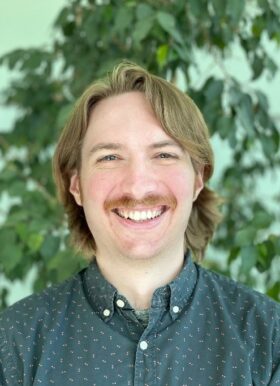
Peter Millar, PhD
Dr. Peter Millar completed his PhD in Psychological & Brain Sciences at Washington University in St. Louis in 2020, working with Dr. Dave Balota, where he focused on cognitive changes in healthy aging and early Alzheimer disease. He further trained as a postdoctoral research associate with Dr. Beau Ances in the Department of Neurology at Wash U, where he completed additional training in functional and structural neuroimaging methods. He is now an Instructor in Neurology at Wash U. His primary research interests involve using multimodal neuroimaging and advanced computational techniques to study the effects of aging and Alzheimer disease on the brain and how they related to cognition.
- Email: pmillar@wustl.edu
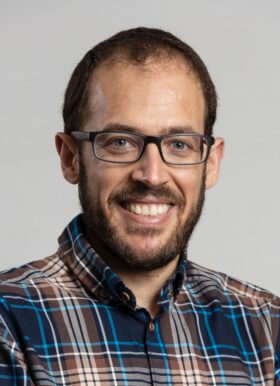
Miguel Minaya, PhD
My research primarily focuses on coupling stem cell modeling with genomic approaches to determine whether there is a common molecular mechanism that links the existence of certain MAPT mutations to the surge in tauopathies observed when they are present. To this end, I study transcriptomic profiles of iPSC-neurons, -astrocytes and -microglia carrying disease-related mutations and compare them to isogenic controls created using CRISPR/Cas9 protocols. My long-term goal is to use ever more powerful novel approaches such as CRISPRi for multimodal genetic screening in human cell lines to understand more deeply the functions of several molecular drivers of disease and how to target these signatures to treat disease.
- Phone: 314-747-2612
- Email: miguel.minaya@wustl.edu
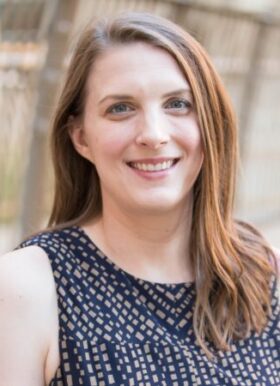
Beth Prusaczyk, PhD, MSW
Dr. Prusaczyk’s research focuses on improving the health and healthcare of older adults, particularly vulnerable older adults such as those with dementia or those living in rural areas, through the use of implementation science and data and technology. Specifically, her research focuses on the implementation of evidence-based practices and policies that improve care at the intersection of the health and social service settings. She is also interested in using social network analysis to understand care coordination and communication among health and social service providers.
- Email: beth.prusaczyk@wustl.edu
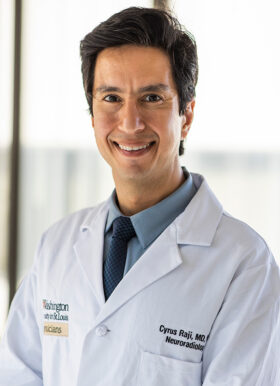
Cyrus A. Raji, MD, PhD
Cyrus A. Raji, MD, PhD is an assistant professor of radiology and a principal investigator in the Neuroimaging Labs Research Center at Mallinckrodt Institute of Radiology (MIR), the academic radiology department of Washington University School of Medicine in St. Louis. Raji, also a professor neurology, serves as director of neuromagnetic resonance imaging at Barnes-Jewish Hospital and as associate director of the diagnostic radiology residency research track. He is board certified in diagnostic radiology and neuroradiology with research interests focusing on modifiable risk factors for dementia and the role of advanced neuroimaging in quantitatively tracking related brain changes.
- Email: craji@wustl.edu
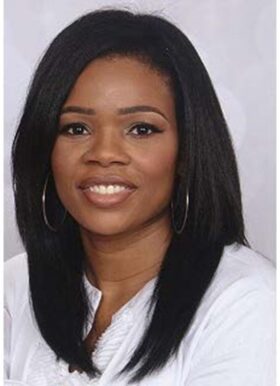
Selena Washington, PhD, OTR/L
I am an assistant professor at Saint Louis University (SLU), and my current research is conducted at SLU and the Washington University Performance, Environment, Participation Laboratory. I have sought out collaborative and community engaged Dissemination & Implementation research directly related to fall prevention and home modifications for diverse older adults and adults aging with disability. I have been included in federal grant applications (HRSA, HUD, NIA grants) as a sub recipient, and established grant funded staff positions and a research team within my department. I am currently engaged as an investigator/trainee within a NIA research supplement grant, Falls: A Marker of Preclinical Alzheimer’s Disease. Through this supplement, I am investigating the relationship between cognition, fall risks/falls; and the functional symptoms of the pre-clinical stage of Alzheimer's disease within adults aging with Down syndrome.
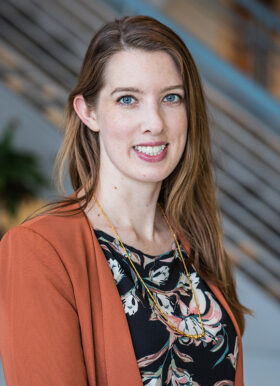
Muriah Wheelock, PhD
Dr. Muriah Wheelock is currently an Instructor in the Department of Radiology at Washington University in St. Louis. She obtained her PhD in Behavioral Neuroscience from the University of Alabama at Birmingham where she studied the behavioral and neural response to psychosocial stress using functional and structural connectivity analysis. During her postdoctoral training in Developmental Neuroscience at Washington University in St. Louis, she utilized graph theory to determine brain networks underlying healthy and disordered cognitive and behavioral development. Through additional postdoctoral training in Translational Sciences at Washington University, she gained experience with technology innovation. Her BRAIN Initiative project is focused on developing and disseminating network level analysis methods for connectome-wide association studies. These tools will be useful for connectome analysis across species, across the lifespan, and for understanding healthy and disordered cognition and behavior.
- Email: mdwheelock@wustl.edu