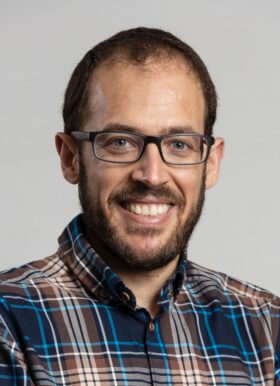
Miguel Minaya, PhD
My research primarily focuses on coupling stem cell modeling with genomic approaches to determine whether there is a common molecular mechanism that links the existence of certain MAPT mutations to the surge in tauopathies observed when they are present. To this end, I study transcriptomic profiles of iPSC-neurons, -astrocytes and -microglia carrying disease-related mutations and compare them to isogenic controls created using CRISPR/Cas9 protocols. My long-term goal is to use ever more powerful novel approaches such as CRISPRi for multimodal genetic screening in human cell lines to understand more deeply the functions of several molecular drivers of disease and how to target these signatures to treat disease.
- Phone: 314-747-2612
- Email: miguel.minaya@wustl.edu
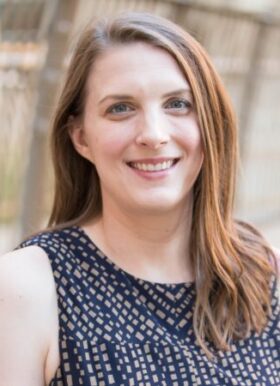
Beth Prusaczyk, PhD, MSW
Dr. Prusaczyk’s research focuses on improving the health and healthcare of older adults, particularly vulnerable older adults such as those with dementia or those living in rural areas, through the use of implementation science and data and technology. Specifically, her research focuses on the implementation of evidence-based practices and policies that improve care at the intersection of the health and social service settings. She is also interested in using social network analysis to understand care coordination and communication among health and social service providers.
- Email: beth.prusaczyk@wustl.edu

Cyrus A. Raji, MD, PhD
Cyrus A. Raji, MD, PhD is an assistant professor of radiology and a principal investigator in the Neuroimaging Labs Research Center at Mallinckrodt Institute of Radiology (MIR), the academic radiology department of Washington University School of Medicine in St. Louis. Raji, also a professor neurology, serves as director of neuromagnetic resonance imaging at Barnes-Jewish Hospital and as associate director of the diagnostic radiology residency research track. He is board certified in diagnostic radiology and neuroradiology with research interests focusing on modifiable risk factors for dementia and the role of advanced neuroimaging in quantitatively tracking related brain changes.
- Email: craji@wustl.edu
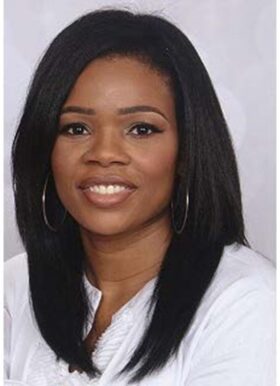
Selena Washington, PhD, OTR/L
I am an assistant professor at Saint Louis University (SLU), and my current research is conducted at SLU and the Washington University Performance, Environment, Participation Laboratory. I have sought out collaborative and community engaged Dissemination & Implementation research directly related to fall prevention and home modifications for diverse older adults and adults aging with disability. I have been included in federal grant applications (HRSA, HUD, NIA grants) as a sub recipient, and established grant funded staff positions and a research team within my department. I am currently engaged as an investigator/trainee within a NIA research supplement grant, Falls: A Marker of Preclinical Alzheimer’s Disease. Through this supplement, I am investigating the relationship between cognition, fall risks/falls; and the functional symptoms of the pre-clinical stage of Alzheimer’s disease within adults aging with Down syndrome.
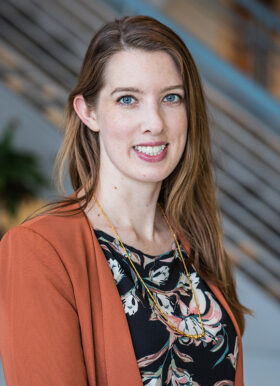
Muriah Wheelock, PhD
Dr. Muriah Wheelock is currently an Instructor in the Department of Radiology at Washington University in St. Louis. She obtained her PhD in Behavioral Neuroscience from the University of Alabama at Birmingham where she studied the behavioral and neural response to psychosocial stress using functional and structural connectivity analysis. During her postdoctoral training in Developmental Neuroscience at Washington University in St. Louis, she utilized graph theory to determine brain networks underlying healthy and disordered cognitive and behavioral development. Through additional postdoctoral training in Translational Sciences at Washington University, she gained experience with technology innovation. Her BRAIN Initiative project is focused on developing and disseminating network level analysis methods for connectome-wide association studies. These tools will be useful for connectome analysis across species, across the lifespan, and for understanding healthy and disordered cognition and behavior.
- Email: mdwheelock@wustl.edu
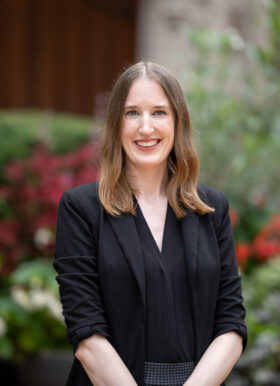
Emily Willroth, PhD
Dr. Emily Willroth is an Assistant Professor in the Department of Psychological and Brain Sciences. She investigates how components of psychosocial wellbeing (e.g., life satisfaction, sense of purpose, social connection) vary and change across time, both in the short-term from moment-to-moment and in the long-term across the adult lifespan. She applies insights from this research to examine links between psychosocial wellbeing and important health outcomes in middle and older adulthood, such as cognitive decline, dementia, and stroke.
- Email: emily.w@wustl.edu