WashU discussion examines disparities, trust and Black participation
2026 Norman R. Seay Academic Lecture (Links to an external site)
Watch this year’s lecture held at the Eric P. Newman Education Center.
2026 Norman R. Seay Lecture – Community Conversation Event (Links to an external site)
Watch this year’s special event held at the Deaconess Foundation.
2026 Norman R. Seay Lecture (Links to an external site)
For more information on this 2-day event and to register to attend, please click the red text above.
State of the Knight ADRC Lecture for 2026 (Links to an external site)
View this year’s video at our YouTube channel.
Bateman and Holtzman receive 2026 American Innovator Award (Links to an external site)
Randall J. Bateman, MD, the Charles F. & Joanne Knight Distinguished Professor of Neurology, and David M. Holtzman, MD, the Barbara Burton and Reuben M. Morriss III Distinguished Professor, both in WashU Medicine’s Department of Neurology, have been selected to receive the 2026 American Innovator Award from the Bayh-Dole Coalition. The award honors researchers, entrepreneurs and technology professionals who exemplify the determination required to move a federally funded discovery from the laboratory to the marketplace.
Blood test powered by AI could transform diagnosis of dementia (Links to an external site)
New tool can distinguish among major neurodegenerative diseases with goal of providing clarity for treatment decisions
Falls signal faster cognitive decline in older adults (Links to an external site)
Older adults who experienced at least one fall exhibited a faster decline in cognitive skills over the following decade than those who hadn’t fallen, according to a new study by researchers at Washington University School of Public Health in St. Louis. The study also revealed that falls are a risk factor for Alzheimer’s disease on par with Alzheimer’s brain proteins, the gold standard for gauging Alzheimer’s dementia risk.
Blood Test ‘Clock’ Can Predict Alzheimer’s Symptoms Before They Emerge (Links to an external site)
Understanding the timeline of Alzheimer’s degeneration can improve support for those affected, and researchers have now built a new ‘molecular clock’ to predict the onset of symptoms years in advance, using established blood markers.
Blood test ‘clocks’ predict when Alzheimer’s symptoms will start (Links to an external site)
Researchers at Washington University School of Medicine in St. Louis have developed a method to predict when someone is likely to develop symptoms of Alzheimer’s disease using a single blood test.
These driving habits could be a warning sign of Alzheimer’s, study finds (Links to an external site)
Driving data could be a new way to identify people who are at risk of cognitive decline, researchers find.
CBS News Sunday Morning: Promising clinical trials in Alzheimer’s prevention (Links to an external site)
In this national spotlight, CBS News chief medical correspondent Dr. Jon LaPook sits down with Randall J. Bateman, MD, to explore groundbreaking global clinical trials that are redefining the future of Alzheimer’s care — proving that continued research matters now more than ever.
2025 Norman R. Seay Lecture (Links to an external site)
View this year’s video at our YouTube channel.
State of the Knight ADRC Lecture for 2025 (Links to an external site)
View this year’s video at our YouTube channel.
Sleep aid blocks neurodegeneration in mice (Links to an external site)
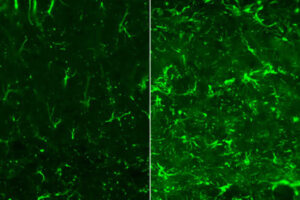
Lemborexant, similar sleep drugs show promise in treating disorders related to tau, such as Alzheimer’s disease
Annual Participants’ Meeting (2025) (Links to an external site)

Access this year’s recording and slides from our Participants’ Meeting page.
Drug to slow Alzheimer’s well tolerated outside of clinical trial setting (Links to an external site)

In a recent study, researchers at WashU Medicine found adverse events were rare and manageable among clinic patients with very mild or mild Alzheimer’s disease who received lecanemab infusions at the Memory Diagnostic Center at WashU Medicine.
Most people say they want to know their risk for Alzheimer’s dementia, fewer follow through (Links to an external site)
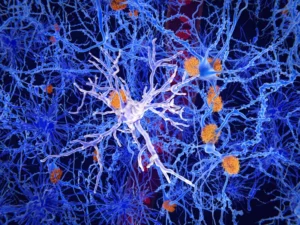
Among reasons for declining, research participants say knowing would be a burden to themselves, family members
Faster, cheaper, better: the rise of blood tests for Alzheimer’s (Links to an external site)
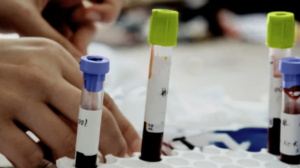
Circulating biomarkers are quickly becoming a crucial part of diagnosis and disease monitoring for physicians, researchers — and even some consumers.
The unusual genetic inheritance that could change Alzheimer’s treatment (Links to an external site)

The genes of a Colombian woman who beat the odds might lead to a new way to tackle the disease.
Highly accurate blood test diagnoses Alzheimer’s disease, measures extent of dementia (Links to an external site)

A newly developed blood test for Alzheimer’s disease not only aids in the diagnosis of the neurodegenerative condition but also indicates how far it has progressed, according to a study by researchers at Washington University School of Medicine in St. Louis and Lund University in Sweden.
Anti-amyloid drug shows signs of preventing Alzheimer’s dementia (Links to an external site)
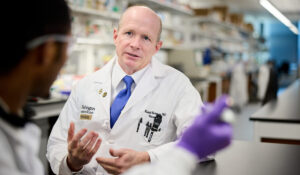
Clinical trial of people destined to develop early-onset Alzheimer’s disease shows eliminating amyloid from brain may prevent symptoms, supports need for confirmatory studies.
Researchers find a hint at how to delay Alzheimer’s symptoms. Now they have to prove it (Links to an external site)

An experimental treatment appears to delay Alzheimer’s symptoms in some people genetically destined to get the disease in their 40s or 50s, according to new findings from ongoing research now caught up in Trump administration funding delays.
$4.5 million supports pathbreaking neuroimmunology research (Links to an external site)

Washington University School of Medicine in St. Louis has received a three-year $4.5 million grant from the Carol and Gene Ludwig Family Foundation, aimed at advancing research on neuroimmunology and neurodegeneration with the ultimate goal of developing new treatments for Alzheimer’s disease.
Patient defies genetic fate to avoid Alzheimer’s (Links to an external site)
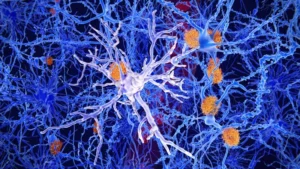
Doug Whitney, who lives near Seattle, Wash., inherited a mutation that has caused many family members to develop Alzheimer’s disease at about age 50, yet he shows no sign of the illness at age 75. His case is the subject of a new study by WashU Medicine researchers that aims to identify potential routes to preventing or treating Alzheimer’s based on Whitney’s exceptional resilience to the disease.
Two Alzheimer’s drugs help patients live independently at home for longer periods (Links to an external site)

Lecanemab (Leqembi) and donanemab (Kisunla) could slow cognitive decline, but side effects exist.
Anti-amyloid treatments: Why we think they are worth it (Links to an external site)
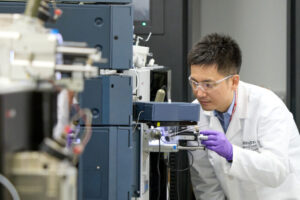
Years of experience watching our patients progressively decline and die from complications of Alzheimer’s disease (AD) has strongly motivated us to provide newly approved anti-amyloid treatments to appropriate patients. Following detailed and personalized discussions of the potential risks and benefits of these treatments with patients and their families, almost 300 patients at our clinic have chosen to receive lecanemab infusions
Next-gen Alzheimer’s drugs extend independent living by month (Links to an external site)

New analysis recasts benefits of treatment in relation to day-to-day impacts on patients’ lives
International Alzheimer’s prevention trial in young adults begins (Links to an external site)
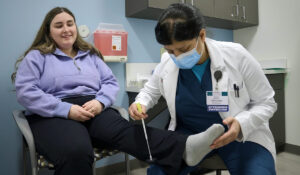
WashU Medicine-led trial evaluating investigational drug from Eli Lilly and Company aims to stop disease before symptoms arise
Can a Drug Prevent Alzheimer’s Disease Decades Before It Happens? (Links to an external site)
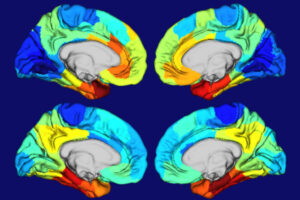
Scientists are testing an experimental anti-amyloid antibody in people expected to develop early-onset Alzheimer’s.
Memory Loss Isn’t the Only Sign of Dementia (Links to an external site)

Memory loss is the most well-known symptom of dementia, particularly Alzheimer’s disease. But experts say there are other warning signs that can signal early brain changes — ones that are especially important for types of dementia where forgetfulness is not the primary symptom.
Fighting to Avoid Her Mother’s Fate, for Her Daughters’ Sake (Links to an external site)
New drug targets for Alzheimer’s identified from cerebrospinal fluid (Links to an external site)
Using cerebrospinal fluid (CSF) collected from living patients, a team of researchers at Washington University School of Medicine in St. Louis has for the first time linked disease-related proteins and genes to identify specific cellular pathways responsible for Alzheimer’s genesis and progression. Because these proteins were gathered from CSF, they are a good proxy for activity in the brain, and several of them may be potential targets for therapies.
Scientists Analyze Body Fluid to Find New Drugs for Disease (Links to an external site)
An analysis of cerebrospinal fluid has uncovered several proteins likely involved in the development and progression of Alzheimer’s disease.
The study, published in the journal Nature Genetics, identified more than a dozen proteins that represent potential targets for future drug therapies designed to treat the disease, shedding light on how genetics and proteins influence the neurodegeneration seen in Alzheimer’s.
Norman R. Seay Lecture (2024) (Links to an external site)
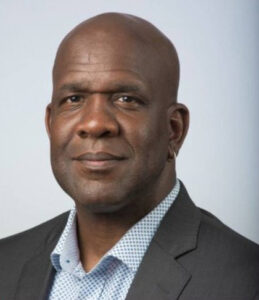
Lecturer Robert Turner II, PhD,
Professor, George Washington
University, Washington D.C.
The Burden of a Gene (Links to an external site)
A variant called APOE4 is notorious for its link to Alzheimer’s. Can new insights into its function help stave off disease?
Accuracy of diagnostic blood tests for Alzheimer’s disease varies (Links to an external site)

Head-to-head comparison of six tests reveals which ones could replace spinal taps, brain scans
Blood tests for Alzheimer’s may be coming to your doctor’s office. Here’s what to know (Links to an external site)
New blood tests could help doctors diagnose Alzheimer’s disease faster and more accurately, researchers reported Sunday – but some appear to work far better than others.
Racial disparities in dementia determined by social factors (Links to an external site)

Racial disparities in dementia are due to social determinants of health, with genetic ancestry playing no role, according to a new study led by researchers at Washington University School of Medicine in St. Louis.
New Alzheimer’s Drug (Links to an external site)

Washington University Professor of Neurology Dr. Joy Snider joins the show to talk about the new Alzheimer’s drug that was approved by the FDA in July.
State of the Knight ADRC Lecture (Links to an external site)

Watch this year’s lecture by Dr. Holtzman along with previous years which are also available.
New Drug Approved for Early Alzheimer’s (Links to an external site)

The drug, Kisunla, made by Eli Lilly, is the latest in a new class of treatments that could modestly slow cognitive decline in initial stages of the disease but also carry safety risks.
Annual Participants’ Meeting (2024) (Links to an external site)
Access this year’s recording and slides from our Participants’ Meeting page.
‘A study to give us hope’: Lifestyle changes improve Alzheimer’s symptoms for some (Links to an external site)

Subtle cognitive decline precedes end to driving for older adults (Links to an external site)

Even slight cognitive changes can affect an older person’s decision to stop driving, according to a new study by researchers at Washington University School of Medicine in St. Louis. The findings suggest that routine cognitive testing — in particular, the kind of screening designed to pick up the earliest, most subtle decline — could help older adults and their physicians make decisions about driving that maximizes safety while preserving independence as long as possible.
Alzheimer’s drug adoption in US slowed by doctors’ skepticism (Links to an external site)
Alzheimer’s disease progresses faster in people with Down syndrome (Links to an external site)

Nearly all adults with Down syndrome will develop evidence of Alzheimer’s disease by late middle age. A new study by researchers at Washington University School of Medicine in St. Louis shows that the disease both starts earlier and moves faster in people with Down syndrome, a finding that may have important implications for the treatment and care of this vulnerable group of patients.
Moment of promise (Links to an external site)

Washington University is known the world over for being a leader in neuroscience research. And the university underscored its commitment to the neurosciences by building an 11-story hub on the Medical Campus that enables researchers to work more collaboratively and creatively. The goal: to accelerate the translation of science into treatments to help those living with neurodegenerative diseases.
Alzheimer’s blood test performs as well as FDA-approved spinal fluid tests (Links to an external site)
Scientists report a major step toward a simple blood test for Alzheimer’s disease. Researchers at Washington University School of Medicine in St. Louis and Lund University in Sweden showed that a blood test is as good at identifying people in early stages of the disease as cerebrospinal fluid tests approved by the Food and Drug Administration (FDA) for Alzheimer’s diagnosis. The findings indicate that a blood test soon may replace more expensive and invasive brain scans and spinal taps for detecting signs of Alzheimer’s in the brain.
Proteins may predict who will get dementia 10 years later, study finds (Links to an external site)
A study of frozen blood samples has turned up a trove of proteins that may predict several forms of dementia more than 10 years before the disease is diagnosed, researchers from the U.K. and China reported on Monday.