A review of dementia research highlights unequal healthcare outcomes for Black and Hispanic people in the US
Racial and ethnic disparities undermine dementia care in the US (Links to an external site)

A review of dementia research highlights unequal healthcare outcomes for Black and Hispanic people in the US

The medications have not been widely tested in Black people with the disease, underscoring stark — and persistent — disparities

A new generation of blood tests is poised to change the way doctors determine whether patients with memory loss also have Alzheimer’s disease.
The tests detect substances in the blood that indicate the presence of sticky amyloid plaques in the brain — a hallmark of Alzheimer’s. So these tests have the potential to replace current diagnostic procedures, like costly PET scans and uncomfortable spinal taps.
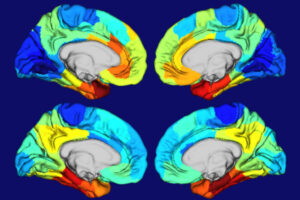
Smoking shrinks the brain and effectively causes premature brain aging, according to a study by researchers at Washington University School of Medicine in St. Louis. Quitting smoking prevents further loss of brain tissue but doesn’t restore the brain to its original size.

Alzheimer’s disease has plagued one large Colombian family for generations, striking down half of its members in the prime of life. But one member of that family evaded what had seemed would be fate: Despite inheriting the genetic defect that caused her relatives to develop dementia in their 40s, she stayed cognitively healthy into her 70s.
Researchers at Washington University School of Medicine in St. Louis now think they know why. A previous study had reported that, unlike her relatives, the woman carried two copies of a rare variant of the APOE gene known as the Christchurch mutation. In this study, researchers used genetically modified mice to show that the Christchurch mutation severs the link between the early phase of Alzheimer’s disease, when a protein called amyloid beta builds up in the brain, and the late phase, when another protein called tau accumulates and cognitive decline sets in. So the woman stayed mentally sharp for decades, even as her brain filled with massive amounts of amyloid. The findings, published Dec. 11 in the journal Cell, suggest a new approach to preventing Alzheimer’s dementia.
People with Alzheimer Disease or other types of dementia often face years of memory and thinking problems that eventually require help from others to assist with daily activities. An estimated 83% of people caring for older adults in the US are family members, friends or other unpaid caregivers. People providing care may have emotional and physical stress, or financial burdens, especially when caring for someone in the later stages of the disease. In this collection of narratives, authors write about the challenges, struggles, and joys of providing care for family members or another close person with Alzheimer’s Disease.

…researchers at Washington University School of Medicine in St. Louis have found — in mice — that Alzheimer’s-like tau deposits in the brain lead to the accumulation of a form of cholesterol known as cholesteryl esters, and that lowering cholesteryl ester levels helps prevent brain damage and behavioral changes.
…Alzheimer’s researchers and clinicians aren’t convinced the Quest test is backed by sound scientific research. The possibility of false-positive results is high, as is the likelihood that older adults won’t understand the significance of their results, they say. The test should be taken only under a physician’s supervision, if at all, they advise. And, priced originally at $399 (recently discounted to $299) and not covered by insurance, it isn’t cheap.
Access talks and videos from this event from our Community Events page.

Watch this year’s lecture by clicking the link above.
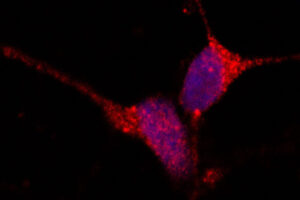
In search of ways to prevent these destructive tau tangles, researchers at Washington University School of Medicine in St. Louis have identified a key step in their development. Intervening at this step potentially could forestall the destructive cascade of events that results in brain damage, the researchers said. The findings are published Sept. 20 in the journal Molecular Psychiatry.

The Food and Drug Administration (FDA) recently gave full approval to Leqembi (lecanemab) for patients in the early stages of Alzheimer’s disease. Barbara Joy Snider, MD, PhD, answers questions about the drug.

The Knight ADRC’s own Myrtis Spencer, Dotti McDowell, Maribel Chebuske, and Heather Klemp were excited to attend the Affinia Health Back-to-School Bash at their N. Florissant Health Center to raise awareness on Alzheimer Disease.

NIH-supported study lays groundwork for Alzheimer’s clinical trials involving people with intellectual disabilities

Patients who live in less affluent neighborhoods and those from underrepresented racial or ethnic groups are less likely than others to receive specialized care for dementia, including Alzheimer’s disease, a new study from Washington University School of Medicine in St. Louis indicates. Further, the research shows that Black people are more likely than white people to be diagnosed with dementia at a later, more advanced stage, which could contribute to inequities in access to new treatments.

Researchers at Washington University School of Medicine in St. Louis and Lund University in Lund, Sweden, have identified a form of tau that could serve as a marker to track Alzheimer’s progression. The marker also could be used by Alzheimer’s drug developers to assess whether investigational tau-based drugs – the next frontier in Alzheimer’s drug development – are effective against the disease. Such drugs theoretically would benefit people in later stages of the disease, when tau tangles play a crucial role.

In a new study published in Science Translational Medicine, researchers from Washington University in St. Louis report on another possible factor: the types of bacteria living in the gut. Experiencing changes in gut bacteria populations may be an early marker for developing the disease, the scientists found. These differences can often begin years before the first symptoms of cognitive decline, such as memory loss and confusion, appear.

Watch this year’s lecture by clicking the link above.


A study by researchers at Washington University School of Medicine in St. Louis shows that the effect stress has on the brain differs by sex, at least in mice. In stressful situations, levels of the Alzheimer’s protein amyloid beta rises sharply in the brains of females but not males. In addition, the researchers identified a molecular pathway that is active in brain cells from female mice but not male mice, and showed that it accounts for the divergent responses to stress.

A small, two-night study has shown that people who took a sleeping pill before bed experienced a drop in the levels of key Alzheimer’s proteins — a good sign, since higher levels of such proteins tracks with worsening disease. The study, which involved a sleeping aid known as suvorexant that is already approved by the Food and Drug Administration (FDA) for insomnia, hints at the potential of sleep medications to slow or stop the progression of Alzheimer’s disease, although much more work is needed to confirm the viability of such an approach.

…everyone has a lot to gain from living with multiple generations, whether that is learning about iPads or the roots of a community, said Dr. Joyce Balls-Berry, an associate professor of neurology at the Washington University School of Medicine in St. Louis.

If researchers could uncover and mimic whatever protects these escapees, they might develop better treatments — even preventive therapies — not only for families plagued by inherited Alzheimer’s but for everyone.

“Doing puzzles, in and of itself, will only improve how you do the puzzles,” said Dr. Beau Ances, a Washington University professor who specializes in neurodegenerative disease. “I am not sure it improves long-term cognition.”
Ances said he has patients who love the puzzles and he absolutely encourages them to keep at it; having a daily ritual you look forward to is beneficial in many ways. Galvan, for instance, told me it’s good for his self-esteem when he conquers a puzzle.
In Alzheimer’s and related neurodegenerative diseases, the brain protein tau is closely linked to brain damage and cognitive decline. A new study from researchers at Washington University School of Medicine in St. Louis indicates that T cells play a key role in tau-related neurodegeneration, a finding that suggests new treatment strategies for Alzheimer’s and related diseases.

Microglia-mediated T cell infiltration drives neurodegeneration in tauopathy

Neurologists discuss the major milestones in identifying biomarkers for detecting early Alzheimer’s disease over the past two decades.

Globalization of ADRD clinical trials has become a pressing need as 68% of the people living with ADRD will reside in low-middle-income countries (LMICs) by 2025.

For 20 years, the Knight Alzheimer Disease Research Center has worked to boost diversity in clinical trials.

Scientists say they have developed a test that can potentially detect Alzheimer’s disease a few years before people typically get a clinical diagnosis.

“This drug is not a cure. It doesn’t stop people from getting worse, but it does measurably slow the progression of the disease,” said Dr. Joy Snider, a neurologist at Washington University in St. Louis. “That might mean someone could have an extra six months to a year of being able to drive.”
Gut bacteria can influence brain health, according to a study of mice genetically predisposed to develop Alzheimer’s-like brain damage. The study, by researchers at Washington University School of Medicine in St. Louis, indicates that gut bacteria produce compounds that influence the behavior of immune cells, including ones in the brain that can cause neurodegeneration. The findings suggest a new approach to treating Alzheimer’s and other neurodegenerative diseases.

Randall Bateman of Washington University, St. Louis, presented the biomarker evidence, concluding that it indicates the treatment modified underlying biology. “These findings support the ability to change the course of Alzheimer’s disease,” he told Alzforum.

Biogen Inc. and Eisai Co. caused a stir in September when they announced positive results in a late-stage trial for a closely watched Alzheimer’s drug, lecanemab. Doctors tempered their excitement, though, until they could scrutinize the full peer-reviewed data.
That data arrived Tuesday night. And while it is stoking enthusiasm that physicians might soon be able to offer patients a treatment that can slow the progression of the devastating disease, doctors need to carefully balance that optimism with safety concerns and the reality that the drug is far from a cure — and in fact, it’s hard to quantify how meaningful it might be for a given patient.

Researchers at Washington University School of Medicine in St. Louis have found a biomarker that identifies, with up to 89% accuracy, people with a primary tauopathy called corticobasal degeneration (CBD). Traditional diagnostic methods for CBD are only 25% to 50% accurate, the researchers said.
A study by researchers at Washington University School of Medicine in St. Louis yields clues to why certain parts of the brain are particularly vulnerable to Alzheimer’s damage. It comes down to the gene APOE, the greatest genetic risk factor for Alzheimer’s disease. The parts of the brain where APOE is most active are the areas that sustain the most damage, they found.

The second (and third) time was not the charm for Roche’s experimental antibody drug for Alzheimer’s disease. The company last night announced gantenerumab had failed to show a statistically significant benefit in two large, late-stage clinical trials that tested its ability to slow patients’ cognitive decline—echoing a previous failure in another so-called phase 3 trial.
A new diagnostic tool by C2N Diagnostics is an important new tool for physicians in the evaluation of Alzheimer disease. It could pave the way for earlier diagnosis and treatment and greater enrollment in clinical trials.
On this episode of The Issues, host Sarah Bernard and her guests (including Dr. Suzanne E. Schindler) speak about Alzheimer’s, dementia, how to care for loved ones with the disease, how to help prevent and delay Alzheimer’s, and new tests for and research about the disease.
Researchers at Washington University School of Medicine in St. Louis have found an innovative way to improve waste clearance from the brain, and thereby possibly treat or even prevent neurodegenerative conditions. They showed that immune cells surrounding the brain influence how efficiently waste is swept out of the brain, and that such immune cells are impaired in old mice, and in people and mice with Alzheimer’s disease. Further, they found that treating old mice with an immune-stimulating compound rejuvenates immune cells and improves waste clearance from the brain.

Scientists are launching a study designed to make or break the hypothesis that Alzheimer’s is caused by a sticky substance called beta-amyloid. The study will give an experimental anti-amyloid drug to people as young as 18 who have gene mutations that often cause Alzheimer’s to appear in their 30s or 40s.
A five-year, $9 million grant from the National Institute on Aging of the National Institutes of Health (NIH) will fund research led by several investigators at Washington University School of Medicine in St. Louis and at the University of Texas at San Antonio to answer that question.

Access this year’s and an archive of past Lectures by clicking the link above.
The Alzheimer’s disease (AD) drug lecanemab’s recent success in Biogen’s Phase III clinical trials might have more to do with its effect in increasing levels of soluble amyloid-beta than in decreasing amyloid plaques in the brain, the findings of a new study published in the Journal of Alzheimer’s Disease on October 4, 2022, suggests.

Carlos Cruchaga, PhD, the Barbara Burton and Reuben M. Morriss III Professor in psychiatry, is one of three Zenith Fellows selected this year and one of only 146 Alzheimer’s researchers chosen for the honor since it was created in 1991.

Dr. Jorge Llibre is a Washington University neurologist that researches Alzheimer’s. He says research shows the Hispanic community is two times more likely to develop Alzheimer’s or dementia than non-Hispanics.

Using demographic information, brain imaging test results and genetic biomarkers, researchers at Washington University School of Medicine in St. Louis have developed an algorithm that can help provide people who volunteer for studies of aging with information about the risk each faces of developing dementia due to Alzheimer’s disease.

A recent study of more than 6 million people 65 and older found that seniors who had Covid-19 had a substantially higher risk of being diagnosed with Alzheimer’s disease within a year.
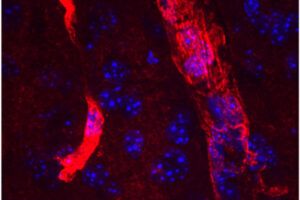
Researchers at Washington University School of Medicine in St. Louis have found a new druggable pathway that potentially could be used to help prevent Alzheimer’s dementia.