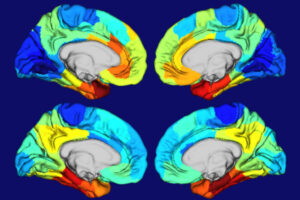
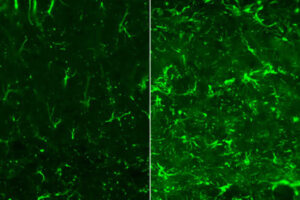
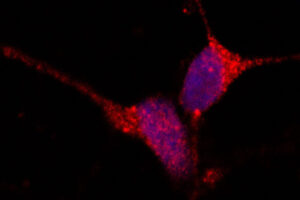
A research team at Washington University School of Medicine in St. Louis has identified potential new treatment targets for Alzheimer’s disease, as well as existing drugs that have therapeutic potential…
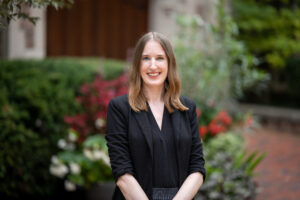
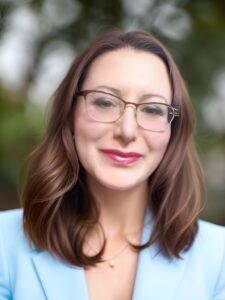
Dr. Emily Willroth is an Assistant Professor in the Department of Psychological and Brain Sciences. She investigates how components of psychosocial wellbeing (e.g., life satisfaction, sense of purpose, social connection) vary and change across time, both in the short-term from moment-to-moment and in the long-term across the adult lifespan. She applies insights from this research to examine links between psychosocial wellbeing and important health outcomes in middle and older adulthood, such as cognitive decline, dementia, and stroke.
…but the collateral source does not remember the name although it was in Ohio. Her spouse’s main occupation was as a research chemist and his last major job was with…
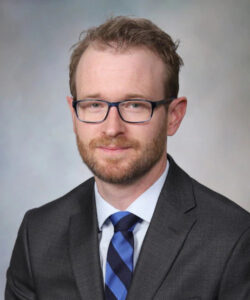
Gregory S. Day, M.D., is a neurologist, with special interest in the diagnosis and management of Alzheimer disease and related causes of dementia. In addition to clinical work, Dr. Day is active in clinical research. He conducts observational studies and clinical trials in Alzheimer disease, rapidly progressive dementia and autoimmune-causes of cognitive impairment.
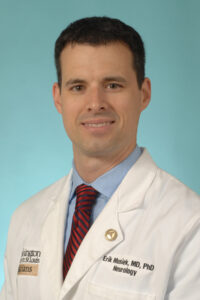
Dr. Ghoshal's research has focused on mechanisms underlying neurodegenerative disorders beginning with the tau protein in Alzheimer's disease (AD) and more recently with the progranulin protein in frontotemporal dementia (FTD). Currently developing a cohort of individuals from dominantly inherited FTD families with mutations in tau or progranulin with a focus on characterizing them clinically and by using biomarkers.
…more about Alzheimer disease than ever before. This is in large part due to the dedication of research volunteers and the gift of brain donation for autopsy. A brain autopsy…
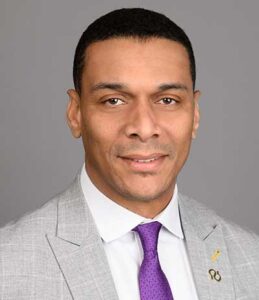
Chief Diversity, Equity, and Inclusion Officer, Alzheimer’s Association
Carl V. Hill, Ph.D., MPH, is the chief diversity, equity and inclusion officer for the Alzheimer's Association, overseeing strategic initiatives to strengthen the Association's outreach to all populations, and providing communities with resources and support to address the Alzheimer's crisis. In this role, Dr. Hill is responsible for driving Association-wide messaging and mobilization efforts addressing systemic health inequities in treatment, clinical trials and research. With support from the National Institute on Aging (NIA), Dr. Hill led the Association's work to convene the first national conference dedicated specifically to addressing disparities and promoting equity in dementia science.
My current research focuses on the use of bioinformatics and genomics to identify new protein and gene targets for disease-modifying treatments in Alzheimer’s disease and frontotemporal dementia. I am the primary investigator of several clinical and translational studies in Alzheimer’s disease and frontotemporal dementia. I also enjoy teaching students, residents and fellows.
You can find the Charles F. and Joanne Knight Alzheimer Disease Research Center (Knight ADRC) on the following social media platforms: Bluesky – @washumedadrc.bsky.social Facebook LinkedIn X – @WashUMedADRC YouTube…
Assistant Professor, University of Wisconsin School of Nursing
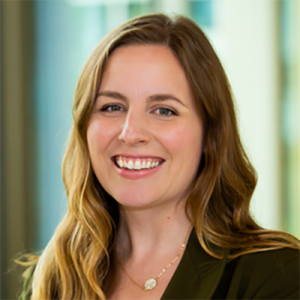
Dr. Zuelsdorff is an epidemiologist studying social-to-biological pathways that shape cognitive health and health disparities in older populations. Primary goals of her research program include identifying (1) community-specific dementia risk factors, as well as (2) personal, community, and policy-based resources that promote successful aging, delay impairment, and reduce burden for families and communities.
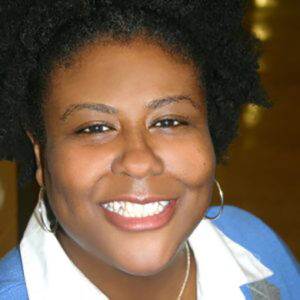
Director, University of Wisconsin School of Medicine and Public Health Center for Community Engagement and Health Partnerships (CCEAHP), University Wisconsin – Madison
Green-Harris has expertise in the areas of health equity, diversity and inclusion, cultural competency, leadership development, and research. She has received numerous awards and recognition for her work, including a 2019-2020 UW-Madison Outstanding Woman of Color Award. In September 2020, she was appointed to chair the Governor’s Health Equity Council.
Commemorating 20 Years of Community-Informed Science & Engagement in Alzheimer Disease Research October 14, 2025 – View Flyer | View Digital Flipbook | View Program PDF
Zoom & in-person conference
The Center on Biological Rhythms and Sleep (COBRAS) enables researchers across diverse specialties and departments to readily investigate the impact of sleep and circadian rhythms on their disease of interest. COBRAS also serves as a platform for development of new collaborative projects and grants and can serve as a core for existing programs.
The Benzinger Lab is a member of the Neuroimaging Laboratory and of the Knight Alzheimer Research Imaging (KARI) Program at Washington University School of Medicine in St. Louis. Led by Dr. Tammie Benzinger, the Lab is focused on developing position emission tomography (PET) and magnetic resonance imaging (MRI) methods for the study of diseases of the central nervous system.
The Lucey Lab investigates the relationship between sleep, aging and Alzheimer disease. Recent evidence suggests a role for sleep in Alzheimer disease pathogenesis and/or as a marker for the onset and/or progression of Alzheimer disease that could be followed as an outcome measure in treatment trials. The major goal of our research is use sleep to prevent or delay Alzheimer disease.
The Snider Lab is interested in exploring how neurons die in neurodegenerative disorders and stroke, with a specific focus on how abnormally folded proteins, such as amyloid b-peptide and polyglutamine-containing proteins, cause neuronal death. These proteins are involved in the pathogenesis of Alzheimer disease and several dominantly inherited neurologic diseases, such as Huntington’s disease, dentatopallidoluysian atrophy and several spinocerebellar ataxias.
Plasticity is one of the hallmark features of the human brain. Use-driven plasticity is critically important for typical development as well as recovering from brain injury. Thus, the overarching goal of the Lab’s research is to better understand use-driven brain plasticity. To this end, the Lab uses various structural and functional MRI and behavioral phenotyping techniques.
…that you would like to learn more about? Would you like to be contacted to learn more about memory and aging research at Washington University? Yes No Register for Event…
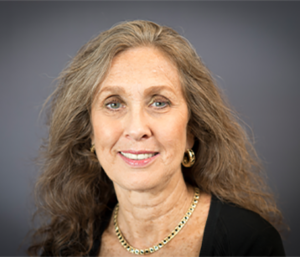
Director and Professor, Institute for Research and Education to Advance Community Health, Elson [S. Floyd College of Medicine, Washington State University
Dr. Buchwald has a broad background in public health and primary care, with special emphases on culturally competent care and the health of American Indians and Alaska Native peoples. Her work considers health at the level of the individual, the community, and the health system, using an array of quantitative and qualitative methodologies.